The ADC investment cavalry is on the charge, but which ADCs will stay the development course?
With the recent news that Synaffix has signed a huge licencing deal with ProfoundBio worth up to a quarter of a billion dollars for accessing their conjugation and linker technologies, it made me reflect on some of the recent deals in the ADC space over the last year that have really caught the eye. The team at Profound Bio have pedigree coming from the Seagen stable, and clearly know a thing or two about how to develop and commercialise ADCs, so when they bet on a horse you can be sure that it has a good chance of winning. But this was only the latest furlong in a cycle of thoroughbred ADC deals.
Following the approval of Trodelvy® earlier in 2020, Gilead parted with an eye-watering $21 billion in October last year to acquire it’s developer Immunomedics. Perhaps not a bad bet, given the large number of clinical trials (28 at the last count) that are active with Trodelvy®.
Coming up fast on the spending rails is AZ who have doubled-down on their 2019 $6.9 billion collaboration with Daiich Sankyo for Enhertu® with a similar follow-up $5 billion collaboration on the DS-1062a ADC last year. With a diverse pipeline of their own, having acquired Spirogen for their ADC PBD dimer payloads in 2013 for less than half a billion dollars, AZ are spreading their bets across the ADC development track.
Following close being is BMS who recently announced a $3.1 billion collaboration with Eisai on its folate receptor alpha ADC, which is not without risk given the challenges with this target including Immunogen’s Phase III ADC failure in 2019, and Eisai’s own struggles developing farletuzumab.
Not to be outdone, Boehringer Ingelheim parted with $1.4 billion to acquire NBE Therapeutics in December last year and brought in-house their ADC linker-payload conjugation SMAC-Technology™ platform.
And back in November last year, Merck shelled out $2.75 billion to acquire VelosBio and got its hands directly on their ROR1 ADC pipeline, which came hot on the heels of its investment into Seagen and their vedotin linker-payload ADC offering to the tune of $1 billion.
Off the back of double-digit ADC approvals and a maturing pipeline of candidates waiting to cross the finishing line, these ADC developers are jockeying for position.
By demonstrating that bundling a conjugation technology and payload offering, Synaffix and NBE Therapeutics have shown the lead in delivering value for investors. Big Pharma are playing their part, and are seemingly in a competition to see how much they can pay for ADC assets rather than how little. If the 2020’s really is the decade of ADCs, then this race still has a way to run yet.
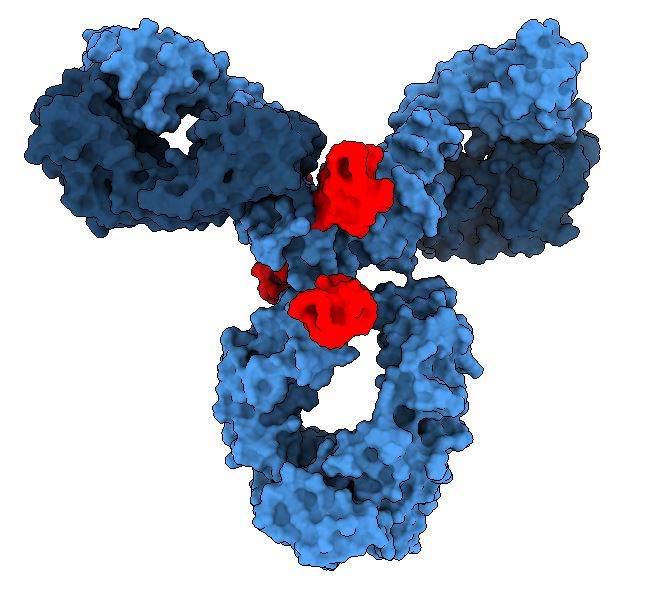
 ADCs
ADCs 