Antibody-Drug Conjugate companies are limbering up and stretching their respective muscles in preparation for the next awards race
With the Japan 2020 Olympics now in full swing, the ADC field is warming up for its own prestigious annual awards competition as part of the World ADC conference from Hanson Wade in a few month’s time. Now in its 8th year, I see that the nominations for the awards have just opened, and this year it’s great to see they are expanded to include an Outstanding Academic Investigator Award.
The awards seem to have been rather dominated over the last few years but I was intrigued to see who actually comes out on top since the last Olympics were held in Rio in 2016. With 2 points for a win and 1 point for runner-up spots, the podium ADC medal table for multi-year recipients looks like the following –
| Company / developer | Winner | Runner-Up | Score |
| BSP Pharmaceuticals | 3 | 2 | 8 |
| Mersana Therapeutics | 2 | 2 | 6 |
| Abzena | 2 | 2 | 6 |
| Sutro Biopharma | 2 | 1 | 5 |
| ADC Therapeutics | 2 | 1 | 5 |
| Bicycle Therapeutics | 2 | 1 | 5 |
| Daiichi Sankyo | 2 | 0 | 4 |
| PPD | 2 | 0 | 4 |
So gold goes to BSP Pharmaceuticals, silver to Mersana Therapeutics and Abzena and bronze to Sutro Biopharma, ADC Therapeutics and Bicycle Therapeutics. An honourable mention should go to Daiichi Sankyo and PPD, as well as Legochem Biosciences who have shown strong consistency without a win.
It is really encouraging to see such a diverse range of technologies, developers, researchers and manufacturers that made it through to this year’s nominations. This makes the job of shortlisting these a challenge, and of selecting the winners even more difficult, but just as the Olympics showcases the many different and varied talents of individuals and teams, so the ADC awards recognises the different contributions to the field.
But I came to asking myself why there is such a diverse range of offerings in the ADC space. It could be argued that the closest we have to a winning technology platform is the vedotin linker-payload however this is only embedded within 3 of the 10 approved ADC drugs, with the ozogamycin linker-payload technology in close competition being in 2/10 approved ADCs.
So why haven’t we figured out yet an approach that outperforms all others? Perhaps in part because development still takes a long time, meaning that even if an optimal ADC technology is identified today, it will still have to wait many years to see it progress into patients and several more to reach market approval.
In expanding the utility of ADCs to fulfil their promise of precision targeted medicine, chemists and biochemists are playing their part with new toxins, new linkers and new conjugation approaches filling the preclinical pipeline. Couple this with different delivery modalities being developed by biologists including antibody fragments, single chains, nanobodies among others, the ADC landscape truly benefits from its multidisciplinary connections.
So maybe this is not about finding a platform that wins out over all others, but that as the ADC field expands, it allows the technology offerings to follow suit, something not lost on investors. This may be the quickest way to solve the ADC therapeutic index conundrum, and as anyone who follows the Olympics knows, it’s usually the quickest who gets the gold.
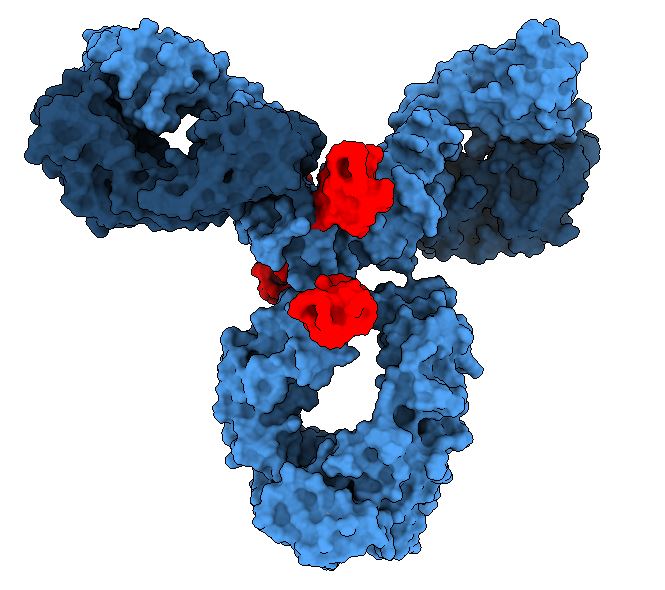
 ADCs
ADCs 