ADCs: the rise of the bioconjugation scientist
I have often found it fascinating when chemists and biologist vie for superiority in the drug discovery pecking order. At it’s best, both disciplines can drive each other forward, pushing each other to make better compounds and to develop better testing methods – a synergy in the design-test paradigm that ultimately leads to better drugs for patients.
It is all too familiar to hear the frustrations from both sides in that: “without the compounds that we make, you wouldn’t have anything to test” say the chemists, and: “without the testing we do on your compounds, you wouldn’t know what to make” say the biologists.
Over the years the interface of these two disciplines has led to a blurring of these rather hard institutionalised lines, particularly at the R&D stage of drug discovery programs.
First there was biological chemistry or biochemistry, which seemed to be an extension of biology involving the study of the chemistry of biomolecules and regulation of biochemical pathways within and between cells, focusing on proteins and nucleic acids; then there was chemical biology dealing in how chemistry can be applied to solve biological problems focusing on small molecules. Perhaps an extension of chemistry, but metaphorically waving to their biochemistry cousins from the other side of the scientific divide.
Then came the medicinal chemists – not just designing and making compounds but being able to interpret biological data to help their redesign by developing strong structure activity relationship abilities, but still not quite enough to claim real estate on both scientific sides. Indeed, none of these scientific sub-disciplines were really able to fully bridge the chemistry|biology (or biology|chemistry) divide, although academia is making a good fist of trying, however this hasn’t really translated into industry-wide practice.
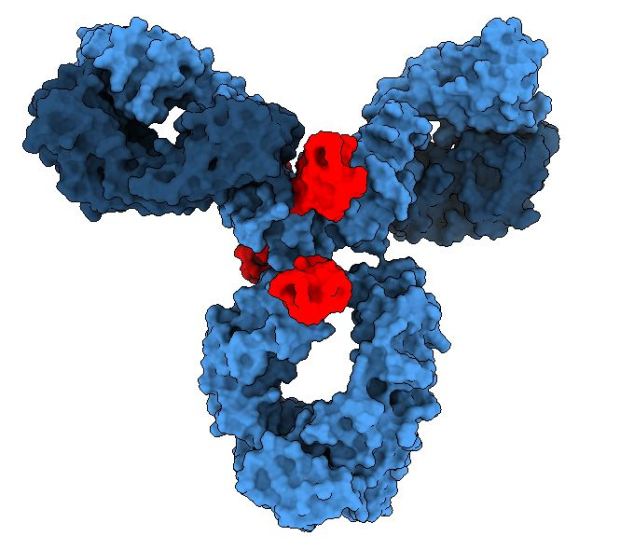
But I was reflecting on the role of the bioconjugation scientist, someone fundamental to the success of antibody-drug conjugates (ADCs). Not only do they need to understand the complexities of the ADC components in terms of the targeting biomolecule being conjugated to, the conjugating functionality and the payload being conjugated, they need to incorporate release units, polymer components, and be able to analyse whether they have been successful or not.
They are well versed in understanding the fundamental design aspects of the conjugating linker-payload (chemistry) to the antibody or protein, but can help design and interpret the characterisation assays (biology) to help identify the best ADC.
As the spotlight on ADCs this decade continues to rise, so too does the stature of the bioconjugation scientist. Finally, a cross-functional discipline that can represent both chemists as well as biologists, with no frustrations about which is higher in the pecking order and restoring parity and equity to the interdependent nature of their input into successful drug programs.
 ADCs
ADCs 