Collaboration is the key to ADC development

Collaboration is the key to ADC development

ADCs.blog

Please see the latest ADC blog posts –

Clever ADC Developers Demonstrate Resilience

Clever ADC Developers Demonstrate Resilience

Painted view from hotel window
ADCs.blog

ADC conference sustainability

ADC conference sustainability

UN Sustainable Development Goals
ADCs.blog

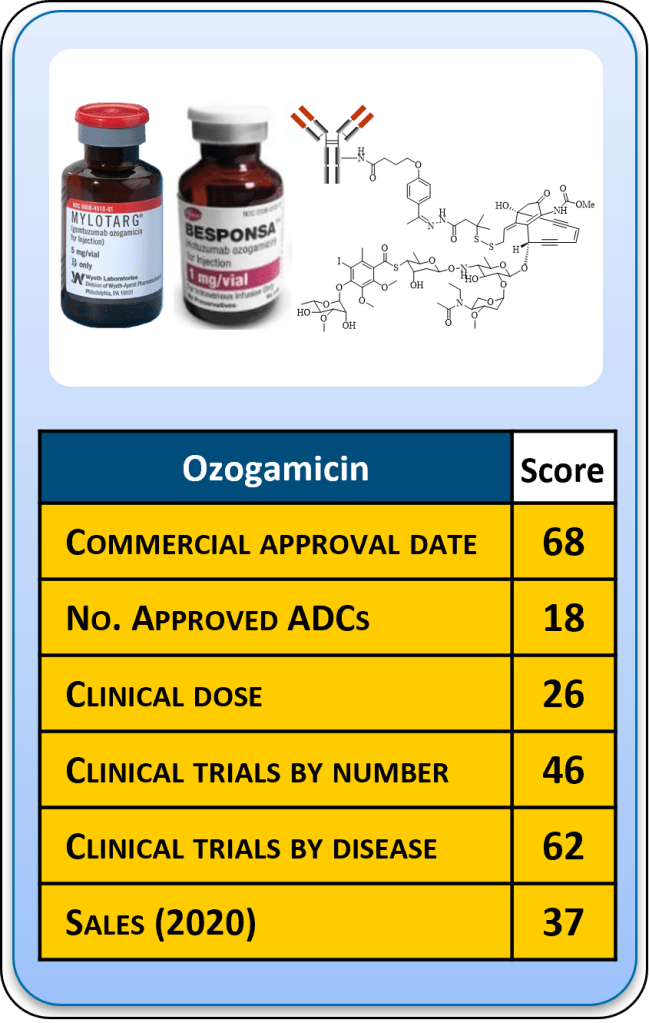
ADC Top Trumps: #Ozogamicin

ADC Top Trumps: #Ozogamicin

For the uninitiated amongst you, Top Trumps is a popular card game where any given subject is assigned descriptors and number values that are compared together with the aim to try to trump and win an opponent’s card. Many a youthful long hour was spent memorising the best cards, or more pertinently how to win with the worst cards. Having not picked up a pack of cards in earnest for more decades than I care to remember, I was recently invited by my young nephew to play a game of Top Trumps, and it rekindled my love of all things comparative. I lost of course, although telling myself it was to let my nephew win, the reality was that I was outplayed. The game though was about Star Wars, and I hadn’t banked on two things: firstly my nephews love of the film series and secondly his extremely erudite recollection of the winning numbers and cards.

I thought that my game was more suited to ADC Top Trumps, at least that was one I had a fighting chance of winning, so thought it would be something to share. Purely subjective, with my own and very personal take on how I allocated the numbers, I have put together a series of Top Trumps cards for ADCs. The first is on #Ozogamicin, and expect follow-ups for #Vedotin, #Mafedotin, #Govitecan, #Deruxtecan, #Ravtansine to complete the deck. More to follow I am sure.

Ozogamicin ADCs

Summary: With two commercially approved ADCs Mylotarg® and Besponsa® including the first back in 2000, the Ozogamicin ADCs are truly pioneering.

Commercial approval: Mylotarg® was approved in 2000 but was voluntarily withdrawn in 2010 and then subsequent re-approval at the same time as Besponsa® in 2017 based on dose fractionation regimens.

Clinical dose: Depending on whether the patient is newly diagnosed or relapsed or refractory, the clinical dosing from induction to continuation is 3-6 mg/m2 for Mylotarg® and 0.8-0.5 mg/m2 for Besponsa®, with follow-up cycles.

Clinical trials by number and disease: Perhaps not unexpectedly due to the length of approval time for the two Ozogamicin ADCs, there are a plethora of clinical trials being conducted, perhaps over 150 across the drugs. This is also reflected in the breadth of disease indications.

Sales: Overall sales remain on the lower side, likely from the other available treatments, the patient size and the question over reapproval and off-target toxicities.

Over time, as we continue to see the increasing approval rates of ADCs through this decade, we will have a full Top Trumps card deck. And maybe I can convince my nephew to have a game, although I suspect before long he would win.

ADCs.blog

How ADCs are challenging for your mental health

How ADCs are challenging for your mental health

It has been very encouraging to hear how mental health is generally now being spoken about in the same breath as physical health. This visibility is seen acutely in sports stars who have a global exposure, and it is great to see the strong support for the prioritisation of mental health for leading athletes such as Simone Biles, Ben Stokes and Naomi Osaka to name just a few.

Like most drug development scientists, ADC developers have to contend with the constant and regular setbacks of compounds not working in the way that they were designed to – either they are not sufficiently active, too toxic, not soluble enough, too unstable or just too difficult to make at scale. This continuous drip-feed effect of negative data can build over time, and before you know it, the difficult little things can become difficult big things very quickly. This may be particularly true for ADCs given the complexity of the modality and the scientifically tough questions ADCs pose – conceptually quite simple in terms of attaching a small molecule to a big molecule, but in reality, far from easy. Just looking at the number of clinical failures demonstrates how much of a challenge this is.

It takes resilience and determination to keep going in the face of adversity, no matter what you are trying to achieve. It is sometimes easy just to accept that knock-backs will happen – this is perhaps part of the nature of the business we are in, but calling this out and reaching out to colleagues for help can have an extremely positive impact on the health – both mental and physical, of us and those around us.

This is why you need a good team surrounding you – one that you can rely on, one that is psychologically safe and one that is there to support you when you are having a tough time of it mentally. Over time, our mental health is challenged in many different ways, and taking the time for Mental Health First Aid should be seen as a sign of strength and not weakness.

We can all ask our colleagues: are you OK? We work closely with each other and can often times identify when behaviours are uncharacteristic, perhaps more so than the person affected realises. It’s ok to say that you are not ok, and we can all support each other by offering that ear to listen.

You never know, you just might need that support from them soon.

ADCs.blog

Linkers as conductors of the ADC orchestra

Linkers as conductors of the ADC orchestra.

Getting all the parts of an ADC working in synergy could be seen as analogous to an orchestra – lots of different parts all contributing to the production of a complimentary output. In the case of the orchestra, this is a generating a wonderful aural creation. And in the case of an ADC, it is generating successful candidates that have a suitable safety profile that offer therapeutic benefits.

Just as the conductor unifies the orchestra, sets the tempo and delivers the sound of the ensemble, so an ADC linker unifies the bioconjugate, sets the stability profile and delivers the appropriate payload concentration; in effect acting as the conductor.

Getting the parts of an ADC in the wrong order, or in the wrong combination, can have devastating effects on whole clinical programs resulting in failures, company closures and a hugely negative impact on patients’ lives. But get their pieces in the right order and conduct them in the right way can have life-changing and transformative effects for patients.

One real driver of this being able to tune the amount of payload being delivered, and by being able to increase the drug-antibody ratio (DAR) through high DAR linker technologies. And why accessing lower potent payloads through linker design can be the difference between a successful ADC program or not. ADC linkers will continue to conduct the ADC orchestral field for a while to come, with the richness of sounds being generated only continuing to rise in volume.

ADCs.blog

When is a drug not a drug? The challenging nature of ADC terminology

When is a drug not a drug? The challenging nature of ADC terminology

You know when you have made it in an industry when you can understand the acronyms, and therefore it always interests me when people start to use them casually in conversation. Use of carefully constructed capital letters that signify that you understand the subject matter and can talk with ease with like-minded scientists can go a long way to demonstrate your credibility in the field.

Antibody-drug conjugates or ADCs have taken this to a whole new level, given the field is similarly defined by this 3-letter acronym. For the uninitiated or newbies to the field, ADCs are enough of a complex modality without having to become familiar with a bunch of additional acronyms but it goes with the territory, so the quicker this new language is learned, the better.

Case in point is the recently approved Zynlonta™ which contains the SG3199 pyrrolobenzodiazepine dimer or PBD dimer for short (surely PBDD?). This PBD dimer is a payload, warhead, cargo or cytotoxin and folks use these interchangeably depending on the audience.

Payload, cargo, warhead, cytotoxin, toxin (*other descriptors) all mean the same thing – what is being conjugated. Just to add a bit of ambiguity, conjugating linkers have cleavable linkers or non-cleavable linkers embedded, so when folks say cleavable linkers, this is typically to release the payload (or *other) intracellularly and not how the linker is conjugated to the antibody.

And don’t’ confuse TOP2 with TROP2 – the former is topoisomerase II that manages DNA replication, and the latter is tumor-associated calcium signal transducer 2, a cell surface glycoprotein. In fact, TROP2 is the antigen target of the Immunomedics ADC Trodelvy® that contains the topoisomerase I inhibitor SN-38 (a TROP2-TOP1 ADC!)

The succinimidyl 4-(N-maleimidomethyl)-cyclohexane-1-carboxylate or SMCC linker is used in the conjugation of the payload (or *other) of DM1 (Drug Maytansioid 1) to trastuzumab to produce the ADC ado-trastuzumab emtansine (Kadcyla®). More accurately, SMCC is pre-conjugation, and MCC post conjugation, denoted by the loss of the succinimidyl S leaving group in the product. So the Kadcyla® ADC drug contains the drug maytansioid drug. Confusing? It starts to feel like there are too many drugs.

Outside of the standard acronym drug development toolbox, the ADC developer should be aware of key acronyms such as DAR – drug-antibody ratio which explains how many payloads (or *other) are conjugated; then there is HIC or hydrophobic interaction chromatography, a go-to analytical technique used in the characterisation of DAR for an ADC; and TDCs are THIOMAB™-drug conjugates with engineered cysteine residues that allow for site-specific conjugation and defined DAR.

In summary, you can combine these acronyms to produce an ADC as an MMC TOP2-TROP2 TDC with a DAR defined by HIC. I am beginning to sound like Adrian Cronauer. Although if you can understand this, then perhaps you are at ADC level 2.0.

ADCs.blog

ADCs: the rise of the bioconjugation scientist

ADCs: the rise of the bioconjugation scientist

I have often found it fascinating when chemists and biologist vie for superiority in the drug discovery pecking order. At it’s best, both disciplines can drive each other forward, pushing each other to make better compounds and to develop better testing methods – a synergy in the design-test paradigm that ultimately leads to better drugs for patients.

It is all too familiar to hear the frustrations from both sides in that: “without the compounds that we make, you wouldn’t have anything to test” say the chemists, and: “without the testing we do on your compounds, you wouldn’t know what to make” say the biologists.

Over the years the interface of these two disciplines has led to a blurring of these rather hard institutionalised lines, particularly at the R&D stage of drug discovery programs.

First there was biological chemistry or biochemistry, which seemed to be an extension of biology involving the study of the chemistry of biomolecules and regulation of biochemical pathways within and between cells, focusing on proteins and nucleic acids; then there was chemical biology dealing in how chemistry can be applied to solve biological problems focusing on small molecules. Perhaps an extension of chemistry, but metaphorically waving to their biochemistry cousins from the other side of the scientific divide.

Then came the medicinal chemists – not just designing and making compounds but being able to interpret biological data to help their redesign by developing strong structure activity relationship abilities, but still not quite enough to claim real estate on both scientific sides. Indeed, none of these scientific sub-disciplines were really able to fully bridge the chemistry|biology (or biology|chemistry) divide, although academia is making a good fist of trying, however this hasn’t really translated into industry-wide practice.

But I was reflecting on the role of the bioconjugation scientist, someone fundamental to the success of antibody-drug conjugates (ADCs). Not only do they need to understand the complexities of the ADC components in terms of the targeting biomolecule being conjugated to, the conjugating functionality and the payload being conjugated, they need to incorporate release units, polymer components, and be able to analyse whether they have been successful or not.

They are well versed in understanding the fundamental design aspects of the conjugating linker-payload (chemistry) to the antibody or protein, but can help design and interpret the characterisation assays (biology) to help identify the best ADC.

As the spotlight on ADCs this decade continues to rise, so too does the stature of the bioconjugation scientist. Finally, a cross-functional discipline that can represent both chemists as well as biologists, with no frustrations about which is higher in the pecking order and restoring parity and equity to the interdependent nature of their input into successful drug programs.

ADCs.Blog

UK contribution to ADCs

UK contribution to ADCs

Those working in the antibody-drug conjugate field are familiar with the interdependent nature of the modality and what is needed to optimise all the constituent parts. As well as drug developers working on next generation novel payloads, linkers and antibodies, this ADC synergy extends further to global interconnected supply chains.

With the recent flurry of successful ADCs approvals, the spotlight is certainly burning brighter for ADCs on these global efforts that continue to drive the field in exciting directions. Following the recent news that so far this year GBP2.39 billion has been raised in UK life sciences, which is on the cusp of a golden age, I was reflecting on how some UK companies are contributing to ADC development.

Just this week BiVictriX announced their intention to float on AIM to support the development of their bispecific technology platform for ADCs. Spirogen pioneered the development of novel ADC payloads with their PBD dimers resulting in its acquisition by AZ, also leading to the spin-out company ADC Therapeutics who have successfully developed the 10th approved ADC Zynlonta™. Femtogenix are developing their next generation ADC payloads with a range of potencies, and Celltrion’s investment in Iksuda in its recently closed $47 million financing round is based on their conjugation technology coupled with a continued expansion of their collaboration with LegoChemBio.

Spirea is building a high drug-antibody ratio (DAR) linker technology and made a recent funding announcement to commercialise this platform for next-generation ADCs. Antikor is developing their OptiLink™ technology platform that uses antibody fragments as a novel delivery vector, and using even smaller binders is recently IPO’d Bicycle Therapeutics who are developing peptide conjugates with a healthy early stage clinical pipeline.

Contract research and manufacturers in the ADC space continue to demonstrate growth, and UK big pharmaceuticals are clearly a big part of this strong ADC ecosystem with AZ and GSK helping to lead the way with marketed products. The 2020’s as the decade of ADCs continues to mature and expand, and it seems that the UK’s contribution is continuing to expand with it.

ADCs.blog

ADC Generation X or is that Generation Xth

ADC Generation X or is that Generation Xth

I was reminded this week that we are celebrating the 10th anniversary of the approval of Adcetris®, a pioneering ADC that gave the field a much needed boost after the voluntary withdrawal the year earlier from the only previously approved ADC, Mylotarg®.

Adcetris® was based on a next-generation linker-payload technology vedotin and was many years in the making, but I found myself thinking – what does “next-generation” ADC mean? It has been used for a long time now to describe the ongoing development iterations of ADCs, but aren’t we always in that “next-generation” phase? What exactly are the different ADC generations?

Damelin notes in his ADC book that “next generation is a significant advance that reflects a new capability or approach”. So what generation of ADC are we on now?

The seminal Nature Reviews article by Alain Beck in 2017 nicely attempted to group ADCs in terms of their generational development. According to Beck, a 1st generation ADC was gemtuzumab ozogamicin (Mylotarg®) characterised by a high portion of unconjugated antibody, poor CMC characteristics and high toxicity with a therapeutic index (TI) on a par with traditional chemotherapies. 2nd generation ADCs were brentuximab vedotin (Adcetris®) and trastuzumab emtansine (Kadcyla®) that had better CMC characteristics with reduced amounts of unconjugated antibody but still had a narrow TI. 3rd generation ADCs have site-specific conjugation technologies, no unconjugated antibody, improved stability and pharmacokinetics and a wider TI, exemplified by vadastuximb talirine or IMGN779.

However according to Vankemmelbeke, 1st generation ADCs used conventional chemotherapy cytotoxins but were hindered by the lack of toxin potency; 2nd generation ADCs used increased potency auristatin, maytansinoid or calicheamicin cytotoxins, but retained heterogeneity and narrow therapeutic window; 3rd generation ADCs are site-specific, have homogeneous toxin loading, and use novel mechanism payloads.

Whichever way you label things, overall the generation of ADCs has been characterised by increasing payload potency, a homogeneous drug-antibody ratio (DAR), and a widening of the TI.

You could make a case for some of the more recent higher DAR “next generation” ADCs developed by Daiichi Sankyo (Enhertu®) and Immunomedics (Trodelvy®) being 3rd generation, but is this the end of the generation game? Ulf Grawunder from NBE Therapeutics and Philipp Spycher from Araris Biotech both make compelling cases for their ADC technologies being classed as 4th generation, but this raises the important question over what this means for other technology platforms offering improvements including Ambryx, Byondis, Catalent, Synaffix, Abzena, Sutro Biopharma or Ajinomoto? Do these also fit into the 4th generation ADC iteration? And if there are linkers that incorporate non-cytotoxic payloads such as oligonucleotides, immunomodulators, or check-point inhibitors, are these 5th generation ADCs or 5th generation ADC linkers in 3rd or 4th generation ADCs?

I’m starting to see that it’s not a bad thing to always being in the “next-generation” ADC phase.

We have seen that members of Generation X truly adding to the development improvements in the ADC field, but perhaps now we are starting to see Millennials up their generation game and now next-generation ADCs are reflected by the new capabilities and approaches.

ADCs.blog

#ADC